


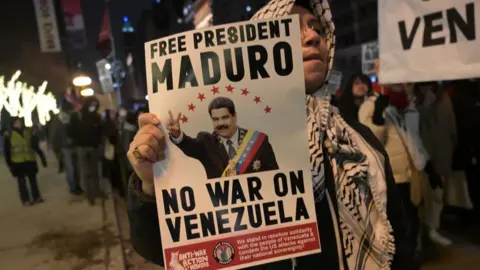
This past Monday, a shackled, jumpsuit-clad Nicolás Maduro exited a armed forces helicopter in New York City, flanked by federal marshals.
The Caracas chief had been held overnight in a well-known federal detention center in Brooklyn, before authorities transferred him to a Manhattan courthouse to face legal accusations.
The chief law enforcement officer has stated Maduro was brought to the US to "answer for his alleged crimes".
But international law experts challenge the lawfulness of the government's maneuver, and argue the US may have violated global treaties governing the military intervention. Domestically, however, the US's actions fall into a juridical ambiguity that may nevertheless culminate in Maduro being tried, despite the circumstances that brought him there.
The US maintains its actions were lawful. The executive branch has accused Maduro of "narco-trafficking terrorism" and abetting the shipment of "vast amounts" of narcotics to the US.
"The entire team operated professionally, with resolve, and in complete adherence to US law and official guidelines," the top legal official said in a statement.
Maduro has consistently rejected US allegations that he manages an narco-trafficking scheme, and in the courtroom in New York on Monday he stated his plea of innocent.
International Law and Action Questions
While the accusations are related to drugs, the US prosecution of Maduro comes after years of censure of his governance of Venezuela from the wider international community.
In 2020, UN investigators said Maduro's government had carried out "serious breaches" constituting human rights atrocities - and that the president and other top officials were connected. The US and some of its partners have also charged Maduro of rigging elections, and refused to acknowledge him as the legal head of state.
Maduro's claimed links to criminal syndicates are the crux of this prosecution, yet the US tactics in putting him before a US judge to answer these charges are also facing review.
Conducting a covert action in Venezuela and taking Maduro out of the country in a clandestine nighttime raid was "a clear violation under international law," said a legal scholar at a institution.
Scholars cited a series of issues presented by the US mission.
The founding UN document forbids members from threatening or using force against other countries. It authorizes "military response to an actual assault" but that danger must be looming, professors said. The other provision occurs when the UN Security Council authorizes such an action, which the US lacked before it took action in Venezuela.
Treaty law would view the illicit narcotics allegations the US claims against Maduro to be a police concern, experts say, not a violent attack that might permit one country to take military action against another.
In comments to the press, the government has framed the mission as, in the words of the foreign affairs chief, "essentially a criminal apprehension", rather than an declaration of war.
Historical Parallels and Domestic Jurisdictional Questions
Maduro has been indicted on illicit narcotics allegations in the US since 2020; the justice department has now issued a revised - or amended - charging document against the South American president. The administration argues it is now executing it.
"The mission was executed to facilitate an active legal case tied to widespread illicit drug trade and related offenses that have spurred conflict, upended the area, and contributed directly to the drug crisis claiming American lives," the AG said in her remarks.
But since the operation, several jurists have said the US broke international law by removing Maduro out of Venezuela without consent.
"A sovereign state cannot go into another independent state and detain individuals," said an professor of international criminal law. "In the event that the US wants to arrest someone in another country, the proper way to do that is extradition."
Regardless of whether an person faces indictment in America, "The United States has no right to go around the world serving an arrest warrant in the jurisdiction of other ," she said.
Maduro's legal team in court on Monday said they would dispute the propriety of the US operation which took him from Caracas to New York.
There's also a ongoing legal debate about whether presidents must comply with the UN Charter. The US Constitution views treaties the country ratifies to be the "binding legal authority".
But there's a clear historic example of a previous government arguing it did not have to comply with the charter.
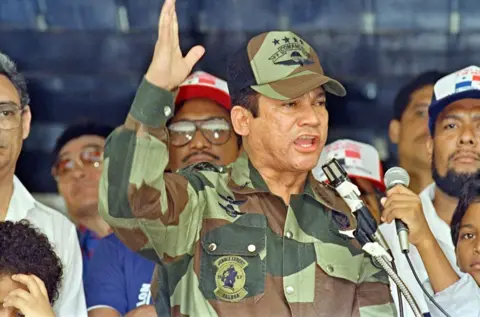
In 1989, the Bush White House ousted Panama's military leader Manuel Noriega and brought him to the US to face illicit narcotics accusations.
An restricted DOJ document from the time argued that the president had the constitutional power to order the FBI to apprehend individuals who violated US law, "even if those actions violate established global norms" - including the UN Charter.
The author of that opinion, William Barr, was appointed the US attorney general and brought the first 2020 indictment against Maduro.
However, the document's reasoning later came under questioning from academics. US federal judges have not directly ruled on the question.
Domestic Executive Authority and Jurisdiction
In the US, the issue of whether this mission broke any domestic laws is complicated.
The US Constitution grants Congress the authority to declare war, but puts the president in charge of the military.
A 1970s statute called the War Powers Resolution establishes restrictions on the president's authority to use the military. It compels the president to consult Congress before committing US troops abroad "to the greatest extent practicable," and notify Congress within 48 hours of initiating an operation.
The government did not provide Congress a heads up before the mission in Venezuela "due to operational security concerns," a cabinet member said.
However, several {presidents|commanders


